11 April 2017
On Permanent Hiatus
This blog was active from 2009 to 2011. The most-viewed posts are preserved here while others have been retired.

08 March 2011
New wiki collecting legal research/pop culture examples for use in class
I’ve Got a Hit! is a new wiki which collects examples of legal research concepts found in movies, TV shows, songs and print. Entries give detailed information about where to find the example, which research concept it demonstrates, how it can be used in class and more.
Please join us! We’re looking for new contributors and listings. If we’ve missed that classic example you use in class – or if you run across a new one the next time you’re watching TV – feel free to add it. Editing access is available for law librarians, professors and others interested in expanding this area.
More information is available at the wiki itself, or you can email me directly with any questions.
14 December 2010
HULK SMASH REDUCTIONIST VIEW OF FANGIRLS
(This has been bothering me for weeks now. And has nothing to do with law. Sorry.)
It started with rain boots. The intersection in front of the law school tends to flood during heavy rains, so I wanted a pair. I saw an advertisement for some officially-licensed Marvel rain boots in a comic book. My first reaction was delight. Then I actually looked at the boots.
I hate them. The comic images are of a woman in some sort of troubled romance. There is a lot of pink. And tears. I don't know if they come from an actual Marvel comic or not. I suspect not. But regardless of the source, I scoffed at ever owning a pair. If I bought a pair of Marvel-related rain boots, they'd have Storm on them chasing the bad weather away (AMIRITE?) or something, not some weepy woman proclaiming her relationship problems to the world. Trying to buy a comic book t-shirt is no better. The official Marvel shop barely has any "women's cut" shirts. And most attempts to get licensed shirts into brick-and-mortar shops focus on the "X Male Superhero is My Boyfriend" type design.
The boots and shirts are only representative of a larger problem. Comic book companies do not know how to sell to women. No, strike that. They only know how to sell to a certain type of woman: the stereotypical one that spends all her time thinking about her nails and her boyfriend. I am sure there are customers out there who love these products. Yay for them (really). I don't have anything against pink or girly rain boots in general. Heaven knows the pair I decided on instead is pretty darn feminine too.
My problem, I think, is that there is no viable alternative. You want a comic book t-shirt cut for women? I hope you think Iron Man and the Hulk spend all their time fighting over you. But me? I want the hilarious Hammer Time shirt and the Deadpool logo one. They're fun and clever and, you know, about comics I actually read.[1] Why do I have to buy the unisex version that will not really fit me and therefore make me look like I'm wearing a tube sock? Why can't they just produce their "guy" products in women's sizes too? Or consider more licenses to companies like Tokidoki, that tread the line between gender and design with more thought?[2]
Comic book companies are trying to reach out to their female audience. Good on them. But they still don't seem to understand that lumping us together under the target audience header "women" is lazy and reductive. It's like when your parents suggest you should be friends with somebody because "you're the same age". Age is an immutable characteristic that generally does not give off much of a spark in the quest for kindred spirits. So why assume the audience you're marketing yourself to can be won over by appealing to a characteristic like that?
This is a snapshot of me: I love reading comics. I'm a huge fan of "literary" series like Fables and The Unwritten, and I dabble in ones like Ed Brubaker's pulp stories and Brian K. Vaughan's stuff[3], but mostly? I read Marvel superhero comics[4]. I like the adventure and the optimism and the fact that writers can actually make me care about the characters under those garish costumes. And yeah, I also dig the occasional romances that are thrown into these stories[5]. Chocolate and peanut butter. But when you take the adventure stuff out and just try to make it all about the romance, you lose me. And this is what the products I'm sulking about do: give you one or the other.
I'm not saying every woman who reads comics is like me. Exactly the opposite, really: not every reader/buyer is the same. And if there are pulp comics and superhero comics and literary ones and tie-in-for-TV-shows-that-died-before-their-time ones and zombie comics and Jane-Austen-and-zombie comics, then clearly the comic book industry is smart enough to have recognized that diversification of products is a really clever business strategy. And here's when I belabor my point a bit just because I want to throw in a quote I like. I realize that trying to define an audience is a lot like the Doctor trying to describe time:
[1] Weeeell, I don't currently read Thor. I've been planning to. But that t-shirt makes me want to start right now.
[2] I will take one of each, please.
[3] Just bought the last couple Y: The Last Man TPBs. So excited.
[4] Hence the beating in this post. Sorry, Marvel!
[5] Seriously. Bigby/Snow? Bucky!Cap/Black Widow? MOAR PLZ.
[6] I realize that I am being extremely optimistic in my vision. The reason there are products like this at all is because comic book companies are trying to make more money. And when a product line is not making enough, they stop selling it. Trust me, I've watched a lot of series I like go under the ax. But this is my rant, okay? And even within that framework, I still think there's a lot of room for improvement.
I hate them. The comic images are of a woman in some sort of troubled romance. There is a lot of pink. And tears. I don't know if they come from an actual Marvel comic or not. I suspect not. But regardless of the source, I scoffed at ever owning a pair. If I bought a pair of Marvel-related rain boots, they'd have Storm on them chasing the bad weather away (AMIRITE?) or something, not some weepy woman proclaiming her relationship problems to the world. Trying to buy a comic book t-shirt is no better. The official Marvel shop barely has any "women's cut" shirts. And most attempts to get licensed shirts into brick-and-mortar shops focus on the "X Male Superhero is My Boyfriend" type design.
The boots and shirts are only representative of a larger problem. Comic book companies do not know how to sell to women. No, strike that. They only know how to sell to a certain type of woman: the stereotypical one that spends all her time thinking about her nails and her boyfriend. I am sure there are customers out there who love these products. Yay for them (really). I don't have anything against pink or girly rain boots in general. Heaven knows the pair I decided on instead is pretty darn feminine too.
My problem, I think, is that there is no viable alternative. You want a comic book t-shirt cut for women? I hope you think Iron Man and the Hulk spend all their time fighting over you. But me? I want the hilarious Hammer Time shirt and the Deadpool logo one. They're fun and clever and, you know, about comics I actually read.[1] Why do I have to buy the unisex version that will not really fit me and therefore make me look like I'm wearing a tube sock? Why can't they just produce their "guy" products in women's sizes too? Or consider more licenses to companies like Tokidoki, that tread the line between gender and design with more thought?[2]
This is a snapshot of me: I love reading comics. I'm a huge fan of "literary" series like Fables and The Unwritten, and I dabble in ones like Ed Brubaker's pulp stories and Brian K. Vaughan's stuff[3], but mostly? I read Marvel superhero comics[4]. I like the adventure and the optimism and the fact that writers can actually make me care about the characters under those garish costumes. And yeah, I also dig the occasional romances that are thrown into these stories[5]. Chocolate and peanut butter. But when you take the adventure stuff out and just try to make it all about the romance, you lose me. And this is what the products I'm sulking about do: give you one or the other.
I'm not saying every woman who reads comics is like me. Exactly the opposite, really: not every reader/buyer is the same. And if there are pulp comics and superhero comics and literary ones and tie-in-for-TV-shows-that-died-before-their-time ones and zombie comics and Jane-Austen-and-zombie comics, then clearly the comic book industry is smart enough to have recognized that diversification of products is a really clever business strategy. And here's when I belabor my point a bit just because I want to throw in a quote I like. I realize that trying to define an audience is a lot like the Doctor trying to describe time:
People assume that time is a strict progression of cause to effect. But actually, from a non-linear, non-subjective viewpoint, it's more like a big ball of wibbly-wobbly ... timey-wimey ... stuff.It's complicated. Very complicated. So keep selling the shirts you've got. Keep licensing the boots that started this whole thing. Somebody is obviously buying them. But take a page from Threadless and TeeFury and offer your other current designs for men and women both. Get somebody to design those Storm boots. Think about your female audience like you do your male one: not just as a gender group, but as a discerning aggregate made up of a lot of smaller, often quite diverse factions. Comic book fans are well-known for being willing to drop significant amounts of money on products they like. So give 'em what they want. What they all want.[6]
[1] Weeeell, I don't currently read Thor. I've been planning to. But that t-shirt makes me want to start right now.
[2] I will take one of each, please.
[3] Just bought the last couple Y: The Last Man TPBs. So excited.
[4] Hence the beating in this post. Sorry, Marvel!
[5] Seriously. Bigby/Snow? Bucky!Cap/Black Widow? MOAR PLZ.
[6] I realize that I am being extremely optimistic in my vision. The reason there are products like this at all is because comic book companies are trying to make more money. And when a product line is not making enough, they stop selling it. Trust me, I've watched a lot of series I like go under the ax. But this is my rant, okay? And even within that framework, I still think there's a lot of room for improvement.
02 July 2010
So I've been reading from the popular collection ...
I went on a library kick a few weeks ago, and in the process read a number of the newest additions to our popular collection. They were all pretty fluffy (hey, it's summertime), but still a fun dip into what the collection has to offer.
She-Hulk, vol. 1: Single Green Female; She-Hulk, vol. 2: Superhuman Law by Dan Slott
Legal Elements: Mild-mannered attorney Jennifer Walters prefers her life as brassy She-Hulk, but when her increasingly raucous behavior gets her kicked out of the Avengers mansion and tossed from her high-powered firm job, her only option is to accept a new position: serving superhuman clients as Jennifer, not She-Hulk.
This is the first She-Hulk story I've read, but it was pretty obvious the legal aspects were incidental to most prior She-Hulk stories. Here, they're front and center. I most enjoyed the first volume, when the stories take place on Earth, in a normal courtroom. Spider-Man suing J. Jonah Jameson for libel? Yes, please. The second volume goes to outer space (and inter-galactic law), a fun idea that fizzled in execution.
Murder on Nob Hill by Shirley Tallman
Legal Elements: Sarah Woolson is one of the first female attorneys in the country, trying to be taken seriously in 1880 San Francisco. After some clever maneuvering gets her a place in a local firm, she sets out to defend a young widow accused of killing her rich, older husband.
A decent enough start to a new series, though the story is often lurid for what seems to be no other reason than to be lurid. And the constant "I am woman, hear me roar" litany got old.
Savor the Moment by Nora Roberts
Legal Elements: The hero is a lawyer. And he's nice to an older client in a brief scene, I think? I really couldn't be bothered to remember.
I'm not saying I was expecting this book to be all about the law, but I was at least hoping to, you know, root for the couple? Roberts put way more energy into the gal pal moments and the wedding planner bits than the rest, which made for a bland, forgettable read.
Solomon vs. Lord by Paul Levine
Legal Elements: Steve Solomon, a solo practice defense attorney, teams up with blue-blooded recent grad Victoria Lord to defend a young widow accused of killing her rich, older husband (waaaait....). Steve is also trying to gain custody of his young nephew.
I completely enjoyed this one. Light and breezy with good dialogue and local color. Levine, himself a former attorney, throws in all kinds of genuine Florida law (Fla. Stat. citations!) for an authentic feel. And the ending isn't your typical legal thriller ending, for which I give it extra points.
The Brontës Went to Woolworths by Rachel Ferguson
Legal Elements: Three sisters and their mother create stories in which they know many famous (and real) people, including a High Court judge and his wife. When the eldest daughter actually meets the Toddingtons, no one is sure of how to reconcile the imagined with the actual.
I loved this book in places. I also wanted to throw it across the room in others. Then it would suddenly be charming again. It was often very difficult to know if what you were reading had actually happened or was part of an imagined history. And the family is disturbingly unsympathetic to those who do not buy into their fantasies. Hrm.
Why Shoot a Butler? by Georgette Heyer
Legal Elements: Frank Amberley, a barrister, comes upon a murder on an English country road and takes it upon himself to solve the crime (to say nothing of snarking on the attempts of the local police to do the same).
Wow, I finally found a Heyer book I really enjoyed. I keep trying to read her books (both the regencies and the mysteries) because everyone from my mother to Michael Dirda recommends them, but I'd yet to hit on one that really interested me. Mr. Amberley didn't really do any barrister-y things here, but he was excellent company along the way. Success!
So. You can see some definite themes to my recent selections: mysteries and feminism, oh my. Yet despite their similarities of theme, the books were each distinctly their own. Whoever started this popular collection is brilliant! Oh wait. Never mind.
She-Hulk, vol. 1: Single Green Female; She-Hulk, vol. 2: Superhuman Law by Dan Slott
Legal Elements: Mild-mannered attorney Jennifer Walters prefers her life as brassy She-Hulk, but when her increasingly raucous behavior gets her kicked out of the Avengers mansion and tossed from her high-powered firm job, her only option is to accept a new position: serving superhuman clients as Jennifer, not She-Hulk.
This is the first She-Hulk story I've read, but it was pretty obvious the legal aspects were incidental to most prior She-Hulk stories. Here, they're front and center. I most enjoyed the first volume, when the stories take place on Earth, in a normal courtroom. Spider-Man suing J. Jonah Jameson for libel? Yes, please. The second volume goes to outer space (and inter-galactic law), a fun idea that fizzled in execution.
Murder on Nob Hill by Shirley Tallman
Legal Elements: Sarah Woolson is one of the first female attorneys in the country, trying to be taken seriously in 1880 San Francisco. After some clever maneuvering gets her a place in a local firm, she sets out to defend a young widow accused of killing her rich, older husband.
A decent enough start to a new series, though the story is often lurid for what seems to be no other reason than to be lurid. And the constant "I am woman, hear me roar" litany got old.
Savor the Moment by Nora Roberts
Legal Elements: The hero is a lawyer. And he's nice to an older client in a brief scene, I think? I really couldn't be bothered to remember.
I'm not saying I was expecting this book to be all about the law, but I was at least hoping to, you know, root for the couple? Roberts put way more energy into the gal pal moments and the wedding planner bits than the rest, which made for a bland, forgettable read.
Solomon vs. Lord by Paul Levine
Legal Elements: Steve Solomon, a solo practice defense attorney, teams up with blue-blooded recent grad Victoria Lord to defend a young widow accused of killing her rich, older husband (waaaait....). Steve is also trying to gain custody of his young nephew.
I completely enjoyed this one. Light and breezy with good dialogue and local color. Levine, himself a former attorney, throws in all kinds of genuine Florida law (Fla. Stat. citations!) for an authentic feel. And the ending isn't your typical legal thriller ending, for which I give it extra points.
The Brontës Went to Woolworths by Rachel Ferguson
Legal Elements: Three sisters and their mother create stories in which they know many famous (and real) people, including a High Court judge and his wife. When the eldest daughter actually meets the Toddingtons, no one is sure of how to reconcile the imagined with the actual.
I loved this book in places. I also wanted to throw it across the room in others. Then it would suddenly be charming again. It was often very difficult to know if what you were reading had actually happened or was part of an imagined history. And the family is disturbingly unsympathetic to those who do not buy into their fantasies. Hrm.
Why Shoot a Butler? by Georgette Heyer
Legal Elements: Frank Amberley, a barrister, comes upon a murder on an English country road and takes it upon himself to solve the crime (to say nothing of snarking on the attempts of the local police to do the same).
Wow, I finally found a Heyer book I really enjoyed. I keep trying to read her books (both the regencies and the mysteries) because everyone from my mother to Michael Dirda recommends them, but I'd yet to hit on one that really interested me. Mr. Amberley didn't really do any barrister-y things here, but he was excellent company along the way. Success!
So. You can see some definite themes to my recent selections: mysteries and feminism, oh my. Yet despite their similarities of theme, the books were each distinctly their own. Whoever started this popular collection is brilliant! Oh wait. Never mind.
20 May 2010
Aborted Musings on Book Browsing
I have had a half-completed post sitting in my text editor for over two weeks now. It was partially on browsing for books (and how that doesn't really happen in academic libraries) and partially on how I judge books by their covers all the time. I really did intend to share deep thinky-thoughts with you all, but I just can't seem to get them written in a coherent form. Instead, I'm stuck saying things like "thinky-thoughts".
Anyway, so what I'm going to do is share all the links that got me ruminating on the topic, and maybe it'll get you pondering too.
I used to spend hours browsing the bookstore, library or bookmobile shelves. Is it just me? Or have you noticed a change in your browsing behavior too? Are we doing our students a disservice by tossing book covers?
Anyway, so what I'm going to do is share all the links that got me ruminating on the topic, and maybe it'll get you pondering too.
- The Guardian recently ran an article explaining why books often get different covers depending on where they are printed.
- And there's a related post on books with similar covers but different prices over at Inklings.
- The North Carolina State University Library has released some open source software which allows users to virtually browse shelves.
- And the American Libraries website posted an article tackling The Myth of Browsing, which maintains, among other things, "Because the books in highest demand are most likely to be in use and, thus, off the shelf, browsing academic library shelves is the equivalent of hitting the sale tables on day three of a three-day sale."
I used to spend hours browsing the bookstore, library or bookmobile shelves. Is it just me? Or have you noticed a change in your browsing behavior too? Are we doing our students a disservice by tossing book covers?
10 May 2010
The Popular Collection, Nine Months On
The students are all busy with exams, and the library is quiet as another semester draws to a close. Sounds like a good time to take a quick look at how the popular collection has grown and changed over the last term. We're in a fairly steady rhythm when it comes to ordering now; a dozen or so titles are added to the books each month, and we've just doubled the size of the movie collection (from ~30 to ~60) after a successful first six-week run. I don't expect any big changes in that respect at this point. There have been two major modifications to how the collection is managed, though: the list is now updated automatically, and we aren't just ordering the books from YBP anymore.
Managing the Lists
The original layout was simple: a webpage listing titles and links to their catalog records. The list was split in two (books and movies) as more titles were added, but each page was still updated manually as every new order arrived. That, understandably, got unwieldy. Visit the book[1] page now and you are presented with a series of links to the catalog, one for the complete title list and the rest for various genres. These lists are automatically updated each time a new title is added to the collection, thanks to the local 690 field. Each record is augmented with a collection description as well as a broad genre listing[2] (e.g. legal classics or mystery and thrillers); these genres were added to help book browsers quickly locate the type of book which interests them. The links on the collection page are subject/keyword searches based on that information. Although it creates a tiny bit of extra work to add this information once we grab the record, it also makes the webpage cleaner, more accurate, and takes readers directly to the record (and therefore more information about the book) without the intermediate step.
Ordering
Our first orders for the popular collection were placed with two companies, Amazon (movies) and YBP (books). Every so often I'd run across a book YBP didn't carry, but the selection seemed generally good. As we moved beyond popular titles like To Kill a Mockingbird and The Pelican Brief, though, it got harder to find everything through Yankee. If it wasn't a perennial seller or new, it wasn't there. We buy a lot of mysteries and thrillers because they're checked out most often, and many of those authors write series. You can see where this is going, yeah? We could get #8 in the series through Yankee but not #1. We needed another source. There was a brief flirtation with the idea of getting books through Baker & Taylor, YBP's parent company, but we already had an Amazon account and got the movies there anyway, so Amazon won. When it comes time to place another order, I check YBP then Amazon as needed. Between the two, we can find pretty much any title we want to add.
I can't say how happy I am to see the collection continue to grow. Learning to manage that growth has been been a fantastic learning experience too, from deciding what to purchase and how to present the collection to navigating the vendor waters. Looking forward to what I learn next. As the Doctor said to the TARDIS, what have you got for me this time?
[1] At present, the movie page is still updated manually; that will change as more titles are added.
[2] Now, technically, the genres should be listed in the 655 (specifically a genre field), but our system isn't set up to search that, so the 690 it is.
Managing the Lists
The original layout was simple: a webpage listing titles and links to their catalog records. The list was split in two (books and movies) as more titles were added, but each page was still updated manually as every new order arrived. That, understandably, got unwieldy. Visit the book[1] page now and you are presented with a series of links to the catalog, one for the complete title list and the rest for various genres. These lists are automatically updated each time a new title is added to the collection, thanks to the local 690 field. Each record is augmented with a collection description as well as a broad genre listing[2] (e.g. legal classics or mystery and thrillers); these genres were added to help book browsers quickly locate the type of book which interests them. The links on the collection page are subject/keyword searches based on that information. Although it creates a tiny bit of extra work to add this information once we grab the record, it also makes the webpage cleaner, more accurate, and takes readers directly to the record (and therefore more information about the book) without the intermediate step.
Ordering
Our first orders for the popular collection were placed with two companies, Amazon (movies) and YBP (books). Every so often I'd run across a book YBP didn't carry, but the selection seemed generally good. As we moved beyond popular titles like To Kill a Mockingbird and The Pelican Brief, though, it got harder to find everything through Yankee. If it wasn't a perennial seller or new, it wasn't there. We buy a lot of mysteries and thrillers because they're checked out most often, and many of those authors write series. You can see where this is going, yeah? We could get #8 in the series through Yankee but not #1. We needed another source. There was a brief flirtation with the idea of getting books through Baker & Taylor, YBP's parent company, but we already had an Amazon account and got the movies there anyway, so Amazon won. When it comes time to place another order, I check YBP then Amazon as needed. Between the two, we can find pretty much any title we want to add.
I can't say how happy I am to see the collection continue to grow. Learning to manage that growth has been been a fantastic learning experience too, from deciding what to purchase and how to present the collection to navigating the vendor waters. Looking forward to what I learn next. As the Doctor said to the TARDIS, what have you got for me this time?
[1] At present, the movie page is still updated manually; that will change as more titles are added.
[2] Now, technically, the genres should be listed in the 655 (specifically a genre field), but our system isn't set up to search that, so the 690 it is.
04 May 2010
Schadenfreude, Online Privacy and Me
I had a bout of self-induced schadenfreude yesterday. I wanted a quote for a piece of correspondence, but could only remember a portion of it. So, being the well-trained researcher I am, I Googled it. The first hit was exactly what I needed. And from a website I created in 2004 and subsequently completely forgot about. After some thought, a bit of trial and error and a few visits to the FAQs, I was able to login and delete the site.
Now, there was nothing shocking posted on that site, nothing that could make my mother blush. (One of the nice things about not drinking alcohol is that you never have to worry about people having crazy!drunk pictures of you.) But it was ... young. It also featured some really rubbish early graphic design work, and a picture of an acquaintance whom, I'm sure, is clueless I even have that picture. Had some employer/colleague stumbled upon it rather than me, the worst I could have been accused of was unequivocal glee.
So why did I delete it? Well, okay, the bad graphic design is a bit embarrassing. But I deleted it for two reasons: 1) it was digital clutter I no longer wanted and 2) it's not my place to have a picture of someone I hardly know up on a website without their permission.
1) Digital Clutter.
I'm a librarian. Part of my job is educating people about data privacy. I advocate crafting an online presence rather than willy-nilly posting for the world to see. And when you find something about me online that I didn't post myself, it's fairly reasonable to assume I know about it and don't mind it being there. So suddenly finding this old relic brought me up a bit short; here was some data I'd lost track of. A quick evaluation said it no longer represented my primary interests or provided the service for which I'd originally crafted it (for myself or anyone else). There was no reason to keep it, and deleting it would make it easier for people researching me to find pertinent, up-to-date information. (My argument is a bit specious in this case, since you'd have to have really known me to find it. But the principle stands.)
2) Privacy.
Social networking was in its infancy when I created that site. Tagging was a mere twinkle. I neither advertised my site, nor even told another about it. So when I posted the picture of that acquaintance (100x100 px, baby), it was rather unlikely that a) it would be found or b) recognized. It wasn't embarrassing, and it amused me. But today, an era in which people tag photos of each other, conduct Google searches on themselves and data is cached for long-term storage, our responsibility to others' privacy is a serious one. Forcing someone to opt-out rather than opt-in is just not how I like to do things. And sure, if I'd decided to keep the site up, I could have just taken down the picture. It just reminded me of how much things have changed online since 2004.
So, what did I learn? Keeping track of your data is an on-going process. You never know what might pop up. And be mindful of how you present others online as well. Technologies and opinions change; you have to be willing to leave them behind sometimes.
Now, there was nothing shocking posted on that site, nothing that could make my mother blush. (One of the nice things about not drinking alcohol is that you never have to worry about people having crazy!drunk pictures of you.) But it was ... young. It also featured some really rubbish early graphic design work, and a picture of an acquaintance whom, I'm sure, is clueless I even have that picture. Had some employer/colleague stumbled upon it rather than me, the worst I could have been accused of was unequivocal glee.
So why did I delete it? Well, okay, the bad graphic design is a bit embarrassing. But I deleted it for two reasons: 1) it was digital clutter I no longer wanted and 2) it's not my place to have a picture of someone I hardly know up on a website without their permission.
1) Digital Clutter.
I'm a librarian. Part of my job is educating people about data privacy. I advocate crafting an online presence rather than willy-nilly posting for the world to see. And when you find something about me online that I didn't post myself, it's fairly reasonable to assume I know about it and don't mind it being there. So suddenly finding this old relic brought me up a bit short; here was some data I'd lost track of. A quick evaluation said it no longer represented my primary interests or provided the service for which I'd originally crafted it (for myself or anyone else). There was no reason to keep it, and deleting it would make it easier for people researching me to find pertinent, up-to-date information. (My argument is a bit specious in this case, since you'd have to have really known me to find it. But the principle stands.)
2) Privacy.
Social networking was in its infancy when I created that site. Tagging was a mere twinkle. I neither advertised my site, nor even told another about it. So when I posted the picture of that acquaintance (100x100 px, baby), it was rather unlikely that a) it would be found or b) recognized. It wasn't embarrassing, and it amused me. But today, an era in which people tag photos of each other, conduct Google searches on themselves and data is cached for long-term storage, our responsibility to others' privacy is a serious one. Forcing someone to opt-out rather than opt-in is just not how I like to do things. And sure, if I'd decided to keep the site up, I could have just taken down the picture. It just reminded me of how much things have changed online since 2004.
So, what did I learn? Keeping track of your data is an on-going process. You never know what might pop up. And be mindful of how you present others online as well. Technologies and opinions change; you have to be willing to leave them behind sometimes.
10 February 2010
Horatio Hornblower and the law of the sea
Thanks to a Barnes and Noble sale and a moment of weakness with my credit card, I picked up the complete Horatio Hornblower series on DVD last week. My well-travelled VHS copies may finally be retired, bless. And rather than be productive around the house I had a marathon; the 1999-2003 series is comprised of eight 100-minute episodes, plus I capped it off with the 1951 Gregory Peck movie. Both are based on C.S. Forester's 11-volume Hornblower book series. Set around the Napoleonic Wars, they tell the story of a young naval officer who rises through the ranks almost as rapidly as Captain Kirk did Starfleet (a not-unfitting comparison, considering the Hornblower series' influence on Star Trek). There is plenty of swashbuckling to be had in the series as you might expect, duels and swordfights and sea battles galore. The production values are also excellent, with the greatest attention paid to detail. And let's not forget the cast. Oh, the cast!
But this blog is about law in literature, you say? There is plenty of that too. The legal code these sailors are subject to can be a harsh one. Men are flogged for theft, negligence and questioning orders while the entire ship's company watches on; officers must justify their command decisions before a court martial; and Hornblower's own daring tactics often test the extremes of interpretation under the Articles of War. The Admiralty is always the ultimate authority, but we also see repeated examples of the ship's captain being his own law enforcer when at sea. During one episode a French ally announces his intent to lodge a complaint about his treatment aboard ship with one of Hornblower's superiors; Hornblower responds with finality, "On this ship, I am the admiral." Yet even Hornblower, for whom duty is all, struggles to carry out some of the naval code's edicts, most notably when an otherwise good man is automatically sentenced to death for striking a superior officer.
The series never calls any particular attention to the role of law at sea, it is simply ever present. To be at sea in His Majesty's Royal Navy is to be subject to its laws, and those laws are enforced with swift regularity.
Now I realize this post is about the TV adaptations, not the original texts. I read the first book in the series, Mr. Midshipman Hornblower about ten years ago and, while every adaptation takes liberties of course (*cough* the elves coming to protect Helm's Deep *cough*), do remember thinking the TV adaptations were fairly faithful. I'm planning to get more of the books read in the near future.
Fire as you bear, Mr. Bush.
But this blog is about law in literature, you say? There is plenty of that too. The legal code these sailors are subject to can be a harsh one. Men are flogged for theft, negligence and questioning orders while the entire ship's company watches on; officers must justify their command decisions before a court martial; and Hornblower's own daring tactics often test the extremes of interpretation under the Articles of War. The Admiralty is always the ultimate authority, but we also see repeated examples of the ship's captain being his own law enforcer when at sea. During one episode a French ally announces his intent to lodge a complaint about his treatment aboard ship with one of Hornblower's superiors; Hornblower responds with finality, "On this ship, I am the admiral." Yet even Hornblower, for whom duty is all, struggles to carry out some of the naval code's edicts, most notably when an otherwise good man is automatically sentenced to death for striking a superior officer.
The series never calls any particular attention to the role of law at sea, it is simply ever present. To be at sea in His Majesty's Royal Navy is to be subject to its laws, and those laws are enforced with swift regularity.
Now I realize this post is about the TV adaptations, not the original texts. I read the first book in the series, Mr. Midshipman Hornblower about ten years ago and, while every adaptation takes liberties of course (*cough* the elves coming to protect Helm's Deep *cough*), do remember thinking the TV adaptations were fairly faithful. I'm planning to get more of the books read in the near future.
Fire as you bear, Mr. Bush.
06 January 2010
Creating a popular collection in a law library
Our library recently started a law-related popular media collection. Which is just a fancy way of saying we're now buying books and movies featuring (mostly) fictional accounts of the law and lawyers. Okay, technically, it's just books for now, but we've got about 30 movies to add to the collection soon as well.
I had an English professor in college who advocated the following writing process: When you've got a paper to write and you've gotten stuck, take a break from writing by doing some related activity. For example, if you're writing about The Importance of Being Earnest, see a production of it. Or read about the trial of Oscar Wilde on Wikipedia. Make yourself some cucumber sandwiches. Soon enough you'll be ready to get back to the main task, now with a slightly broader outlook.
It's an idea I thoroughly embraced. It stayed with me, in slightly adapted form, throughout law school, and when it comes to work was one of the guiding principles behind the new collection. Law students need a break too. But for various reasons they're often unwilling to take one. By providing them with law-related stories, we're offering an alternative to studying without taking too much of a step away.
We piloted the collection during the Fall semester, choosing a wide range of books: from legal classics that every law student feels they should read (One L, To Kill a Mockingbird) to Shakespeare and Plato and Grisham to books professors often recommend like Bleak House and The Once and Future King.
About a third of the collection was checked out at least once, and it was obvious from the broken bindings that many more were read here in the library. We declared that a success, and doubled the size of the collection for the new semester. The legal thrillers in particular were popular so I emphasized that on the last order. I'll also be making a regular monthly order to keep the collection growing.
The next step will be adding the movies to the collection. I expect them to be checked out even more than the books, but that's just a hypothesis for now. I'd also like to fancy up the collection's webpage. The layout is pretty bland at present.
It's been an interesting process, and I'm looking forward to seeing how the collection grows.
I had an English professor in college who advocated the following writing process: When you've got a paper to write and you've gotten stuck, take a break from writing by doing some related activity. For example, if you're writing about The Importance of Being Earnest, see a production of it. Or read about the trial of Oscar Wilde on Wikipedia. Make yourself some cucumber sandwiches. Soon enough you'll be ready to get back to the main task, now with a slightly broader outlook.
It's an idea I thoroughly embraced. It stayed with me, in slightly adapted form, throughout law school, and when it comes to work was one of the guiding principles behind the new collection. Law students need a break too. But for various reasons they're often unwilling to take one. By providing them with law-related stories, we're offering an alternative to studying without taking too much of a step away.
We piloted the collection during the Fall semester, choosing a wide range of books: from legal classics that every law student feels they should read (One L, To Kill a Mockingbird) to Shakespeare and Plato and Grisham to books professors often recommend like Bleak House and The Once and Future King.
About a third of the collection was checked out at least once, and it was obvious from the broken bindings that many more were read here in the library. We declared that a success, and doubled the size of the collection for the new semester. The legal thrillers in particular were popular so I emphasized that on the last order. I'll also be making a regular monthly order to keep the collection growing.
The next step will be adding the movies to the collection. I expect them to be checked out even more than the books, but that's just a hypothesis for now. I'd also like to fancy up the collection's webpage. The layout is pretty bland at present.
It's been an interesting process, and I'm looking forward to seeing how the collection grows.
02 November 2009
The Man Born To Be King: Illuminating the legal procedures propelling the trials of Christ
In addition to writing mysteries, Dorothy L. Sayers wrote a variety of religious works as well. Perhaps chief amongst these is The Man Born To Be King [1], her 12-part radio play cycle about the life of Christ. The 1941/1942 broadcasts were groundbreaking for many reasons. The stories were told in "modern" English (and, oh, what a ruckus there was about that), and the rehearsal period was significantly truncated because of the war (a practice which went on to become a BBC norm), for example.
I've read The Man Born To Be King at least half a dozen times since my dad introduced me to it in high school, but it wasn't until this weekend that I was really struck by the legal procedures driving the action. The tenth play, "The Princes of This World", focuses entirely on Jesus' trials before the Sanhedrin, Pilate and Herod. I knew about the trials, of course; they are a part of the events leading up to the crucifixion, but my brain always glossed over why it all happened as it did -- "He suffered under Pontius Pilate" generally being enough. Suddenly, though, it was clear: we're looking at the interplay between Jewish ecclesiastical law and secular Roman law. Two different legal systems had to be satisfied.
I'm relying on Sayers's own always-excellent research for this, but for those of you who find this sort of thing interesting too, here's a bit of detail.
There were two ways to bring evidence against someone under Jewish law at the time: 1) the testimony of two or more witnesses and 2) the Oath of Testimony, which the accused had to answer himself. The former was by far the more standard approach. For the testimony to be considered valid, however, "Jewish law required the exact verbal agreement of at least two witnesses". [2] When the Sanhedrin was unable to get two witnesses to exactly agree on the statements needed for conviction, Caiaphas turned to the rarer Oath of Testimony.
The events which are recounted in the Bible and which are further explained in The Man Born To Be King are an old example of the juxtaposition of two different legal systems, one a preexisting religious system and the other a secular system laid atop the native laws. The two systems are concerned with enforcing different laws and violations, and while the interplay between them may sometimes be clumsy, the story of Christ's trials and conviction shows how two different systems can be melded together to achieve one end.
Part of Sayers's reason for insisting on writing these plays in modern English was to strip away the remoteness and rigid sanctity through which most people viewed Jesus' story. "[T]he language about him and the worship offered to him seem utterly remote from the speech of men today and from their pressing needs," the BBC's director of religious broadcasting wrote at the time. [8] Sayers succeeded in this remarkably well -- the characters truly do come to life again, particularly for people who are just used to the text of their preferred Biblical translation. And more than just the characters are illuminated in a new way -- the events are as well, allowing us to see the facts like ancient legal procedures clearly as well.
[1] Sayers, Dorothy L. The Man Born To Be King (London: Victor Gollancz Ltd, 1943).
[2] Ibid, at 261 (emphasis provided).
[3] Ibid, at 274.
[4] Ibid, at 278.
[5] Ibid, at 277.
[6] Ibid, at 278.
[7] Ibid, at 270.
[8] Ibid, at 12.
I've read The Man Born To Be King at least half a dozen times since my dad introduced me to it in high school, but it wasn't until this weekend that I was really struck by the legal procedures driving the action. The tenth play, "The Princes of This World", focuses entirely on Jesus' trials before the Sanhedrin, Pilate and Herod. I knew about the trials, of course; they are a part of the events leading up to the crucifixion, but my brain always glossed over why it all happened as it did -- "He suffered under Pontius Pilate" generally being enough. Suddenly, though, it was clear: we're looking at the interplay between Jewish ecclesiastical law and secular Roman law. Two different legal systems had to be satisfied.
I'm relying on Sayers's own always-excellent research for this, but for those of you who find this sort of thing interesting too, here's a bit of detail.
There were two ways to bring evidence against someone under Jewish law at the time: 1) the testimony of two or more witnesses and 2) the Oath of Testimony, which the accused had to answer himself. The former was by far the more standard approach. For the testimony to be considered valid, however, "Jewish law required the exact verbal agreement of at least two witnesses". [2] When the Sanhedrin was unable to get two witnesses to exactly agree on the statements needed for conviction, Caiaphas turned to the rarer Oath of Testimony.
1st Elder: [B]etween witnesses who all say different things and a prisoner who says nothing, we shall be here until tomorrow.Jesus, who had remained silent to that point, was essentially forced to implicate himself. The next part was always the clearest to me: a death sentence ordered under Jewish law had to be ratified under Roman law.
Caiaphas: I will interrogate the man myself.
Nicodemus: My lord, that is barely legal.
Caiaphas: Barely legal, Brother Nicodemus, is still legal. He shall answer under the Oath of Testimony. If he still refuses to speak he is self-condemned. [3]
Caiaphas: By our law he has already been convicted and condemned to death. But by Roman law we are denied authority to execute the sentence. [4]Which leads us to Pilate. To Pilate, most of the charges Jesus was facing would not have seemed like proper violations because they had no real equivalent under Roman law.
Pilate: Ye gods! What's all this stuff?--Blasphemy, sabbath-breaking, witchcraft, law of Moses--pages of it. I suppose they know what it's all about. [5]It wasn't until the charge of treason is raised that Pilate sees anything to consider truly dangerous or requiring his signature.
Pilate: By what offence [sic] has he incurred the death-penalty?The treason charge was thrown in to ensure Pilate's conviction under Roman law too. [7] The subsequent back-and-forth between Pilate, Herod and the religious leaders shows the Roman reluctance to deal with a foreign legal system.
Caiaphas: He pretends to be the Messiah.
Pilate: What does that mean?
Caiaphas: It amounts to a claim to be king of all Israel.
Pilate: There is nothing about that in your court proceedings. I understood he was condemned for blasphemy.
Caiaphas: To us, such a claim is blasphemy, but in Roman eyes it is presumably treason.
Pilate: I see. This is a new charge: treason to Rome. [6]
The events which are recounted in the Bible and which are further explained in The Man Born To Be King are an old example of the juxtaposition of two different legal systems, one a preexisting religious system and the other a secular system laid atop the native laws. The two systems are concerned with enforcing different laws and violations, and while the interplay between them may sometimes be clumsy, the story of Christ's trials and conviction shows how two different systems can be melded together to achieve one end.
Part of Sayers's reason for insisting on writing these plays in modern English was to strip away the remoteness and rigid sanctity through which most people viewed Jesus' story. "[T]he language about him and the worship offered to him seem utterly remote from the speech of men today and from their pressing needs," the BBC's director of religious broadcasting wrote at the time. [8] Sayers succeeded in this remarkably well -- the characters truly do come to life again, particularly for people who are just used to the text of their preferred Biblical translation. And more than just the characters are illuminated in a new way -- the events are as well, allowing us to see the facts like ancient legal procedures clearly as well.
[1] Sayers, Dorothy L. The Man Born To Be King (London: Victor Gollancz Ltd, 1943).
[2] Ibid, at 261 (emphasis provided).
[3] Ibid, at 274.
[4] Ibid, at 278.
[5] Ibid, at 277.
[6] Ibid, at 278.
[7] Ibid, at 270.
[8] Ibid, at 12.
30 September 2009
The Law and Lord Peter Wimsey: More of an Introduction Than an Analysis
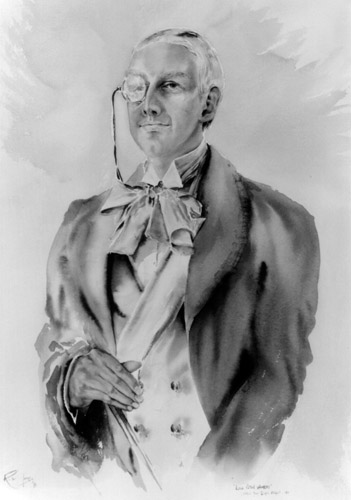
I have recently begun rereading the Lord Peter Wimsey series by Dorothy L. Sayers. Sayers's mysteries are intricately plotted, elegantly written and feature one of my favorite literary characters. Over the course of the series Lord Peter becomes so well-drawn a character that it can be hard to remember he only ever existed on paper. (Particularly when his portrait hangs in Balliol College, Oxford, from which he was to have graduated, and he has his own memorial suite at the Park Lane Hotel, which sits on the site of his flat in London.)
Like many mysteries featuring amateur detectives, the Lord Peter books are considered "cozy" mysteries (rather than hard-boiled or police procedural, the other two main subgenres), though they do contain many descriptions of formal police work because of Lord Peter's friendship with Chief Inspector Parker of Scotland Yard. This interplay between the amateur detective and the police force is hardly unique to this series, of course. What interests me more is Sayers's inclusion of various other legal proceedings in many of the books as well. In Clouds of Witness, for example, the House of Lords assembles under antiquated procedures to try one of their own for murder, and in The Unpleasantness at the Bellona Club Lord Peter must determine who died first, a brother or a sister, in a significant inheritance matter.
My favorite of these legal storylines, however, is in Unnatural Death, which hinges on statutory interpretation. Statutory interpretation! (Sorry, geek moment.) Not only that, but the act in question is the very real Law of Property Act 1925, which is still in force today.
Sayers's in-text illustration of the legal meaning of words v. their everyday meaning wouldn't be at all out of place in a first semester law course even today:
"Then again, words which are quite meaningless in your ordinary conversation may have meaning in law. For instance, I might say to a young man like yourself, 'You wish to leave such-and-such property to so-and-so.' And you would very likely reply, 'Oh, yes, absolutely' -- meaning nothing in particular by that. But if you were to write in your will, 'I leave such-and-such property to so-and-so absolutely,' then that word would bear a definite legal meaning, and would condition your bequest in a certain manner, and might even prove an embarrassment and produce results very far from your actual intentions."
Just because something is classified as fiction doesn't mean it can't contain a whole lot of truth, whether about the law or human nature. The fact that I can sit down to read as an escape and garner some knowledge of real life as well delights me.
(Sidenote: For some reason, I have never really liked the first book in the series, Whose Body?, overly much. It pales next to the others somehow. I don't say this to discourage anyone from reading the series, or to taint your opinion before you even start. I'm just trying to say that if you start there -- and, honestly, they should be read in order because Lord Peter ages in real time -- and feel a bit underwhelmed, know the series only gets better from there.)
Like many mysteries featuring amateur detectives, the Lord Peter books are considered "cozy" mysteries (rather than hard-boiled or police procedural, the other two main subgenres), though they do contain many descriptions of formal police work because of Lord Peter's friendship with Chief Inspector Parker of Scotland Yard. This interplay between the amateur detective and the police force is hardly unique to this series, of course. What interests me more is Sayers's inclusion of various other legal proceedings in many of the books as well. In Clouds of Witness, for example, the House of Lords assembles under antiquated procedures to try one of their own for murder, and in The Unpleasantness at the Bellona Club Lord Peter must determine who died first, a brother or a sister, in a significant inheritance matter.
My favorite of these legal storylines, however, is in Unnatural Death, which hinges on statutory interpretation. Statutory interpretation! (Sorry, geek moment.) Not only that, but the act in question is the very real Law of Property Act 1925, which is still in force today.
Sayers's in-text illustration of the legal meaning of words v. their everyday meaning wouldn't be at all out of place in a first semester law course even today:
"Then again, words which are quite meaningless in your ordinary conversation may have meaning in law. For instance, I might say to a young man like yourself, 'You wish to leave such-and-such property to so-and-so.' And you would very likely reply, 'Oh, yes, absolutely' -- meaning nothing in particular by that. But if you were to write in your will, 'I leave such-and-such property to so-and-so absolutely,' then that word would bear a definite legal meaning, and would condition your bequest in a certain manner, and might even prove an embarrassment and produce results very far from your actual intentions."
Just because something is classified as fiction doesn't mean it can't contain a whole lot of truth, whether about the law or human nature. The fact that I can sit down to read as an escape and garner some knowledge of real life as well delights me.
(Sidenote: For some reason, I have never really liked the first book in the series, Whose Body?, overly much. It pales next to the others somehow. I don't say this to discourage anyone from reading the series, or to taint your opinion before you even start. I'm just trying to say that if you start there -- and, honestly, they should be read in order because Lord Peter ages in real time -- and feel a bit underwhelmed, know the series only gets better from there.)
Subscribe to:
Posts (Atom)